

Ontario Unveils $1.3B Program to Convert Unsold Toronto Condos into Rentals - But let's not call it a Bailout
Ontario has introduced a new initiative, presenting it as a step toward improving housing affordability. The $1.3 billion partnership will convert approximately 2,200 unsold GTA condos into rental units. While officials emphasize affordability, the primary beneficiaries appear to be developers facing financial strain.
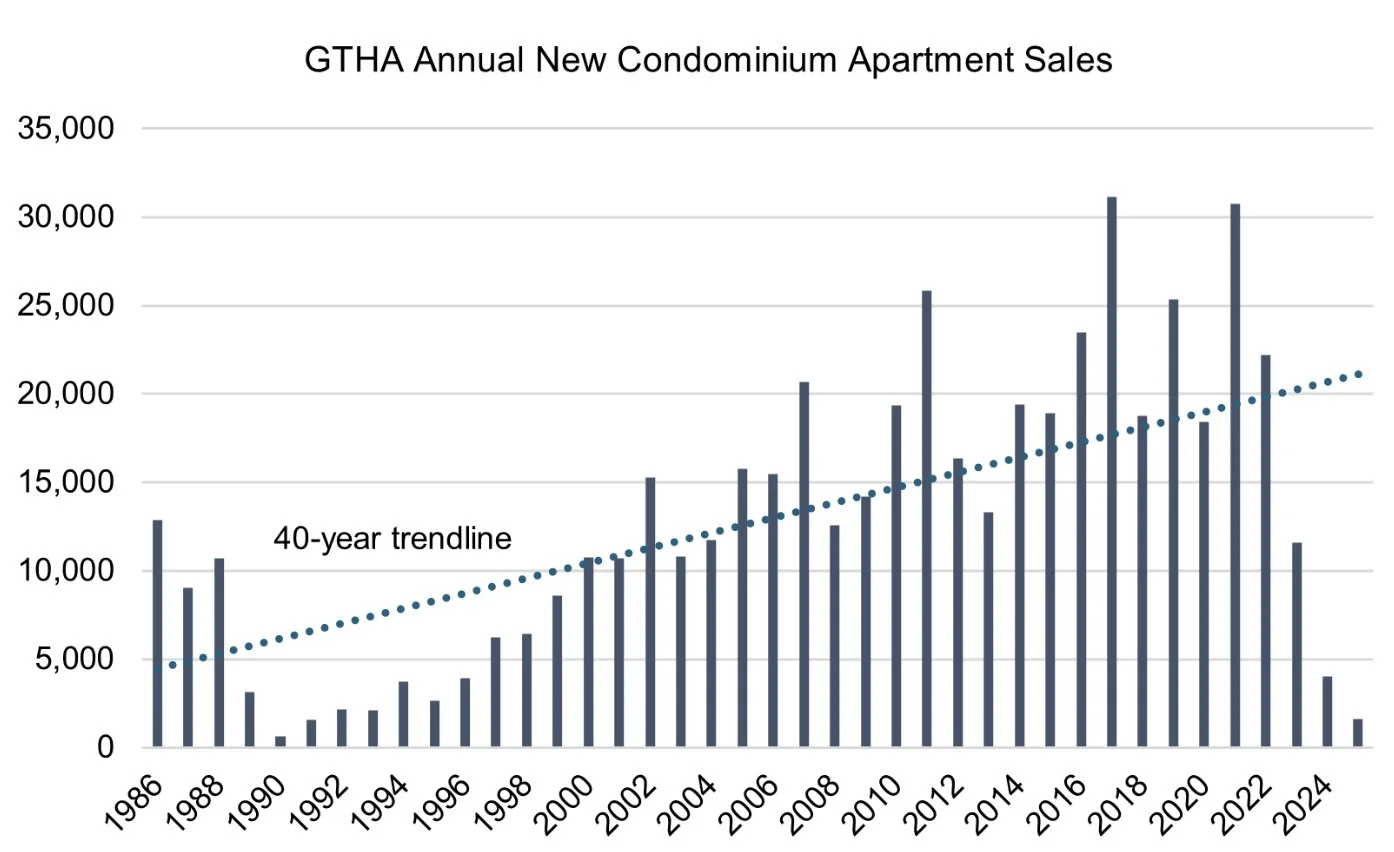
New home sales in Greater Toronto are at historic lows, leading to a surge in inventory across the area. In 2025, new condominium sales in the Greater Toronto Hamilton Area (GTHA) declined for the fourth straight year, dropping 60% from 2024 to just 1,599 units—the lowest level since 1991. Sales in 2025 were 91% below the 10-year average and 95% below 2021 levels. The trend showed no signs of reversing, with only 262 units sold in Q4-2025, the lowest quarterly figure since 1990.
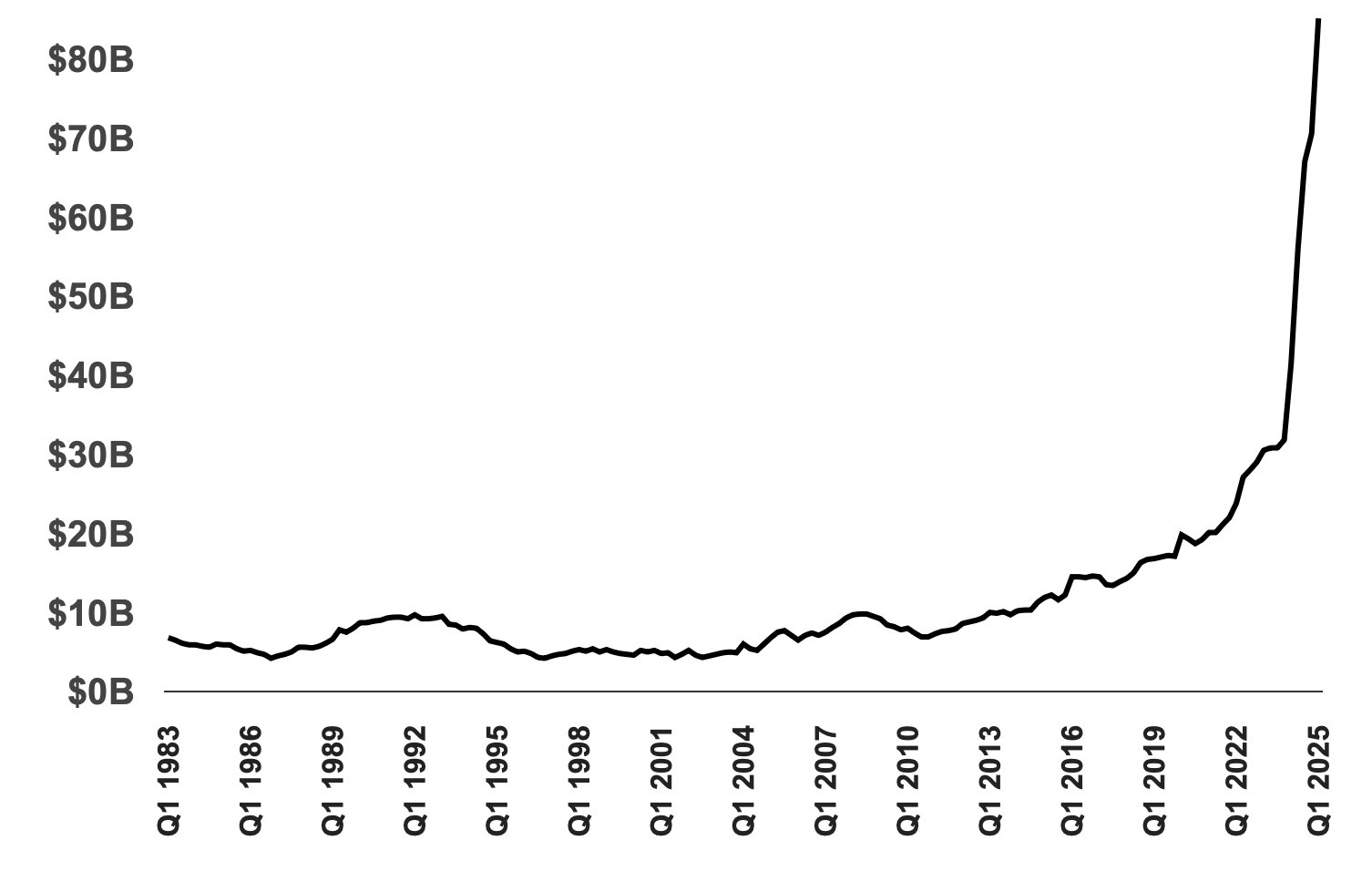
While many believe this is a lifeline being thrown to overleveraged builders and developers, the Government is concerned about something more structural. Traditionally, chartered banks avoided risky builder/developer loans due to the risk of default. This forced developers to turn to expensive secondary-market capital (private equity, syndicates, etc.). As a result, chartered bank loans for builders and developers remained largely stagnant until they suddenly tripled over the past 5 years.
As of Q1 2025, Canadian chartered banks held a record $85.1 billion in real estate development loans, covering construction, builders, and developers. This represents a significant 105.4% surge (+$43.7 billion) year over year, with interim construction lending specifically reaching $32.9 billion.
Loans to the construction industry, builders and developers held by Canadian chartered banks. In billions of dollars.
It’s one thing for a pre-construction buyer to default on a million-dollar loan to the bank; it’s another when a developer defaults on a 100-million-dollar loan.