

It's always darkest before the dawn
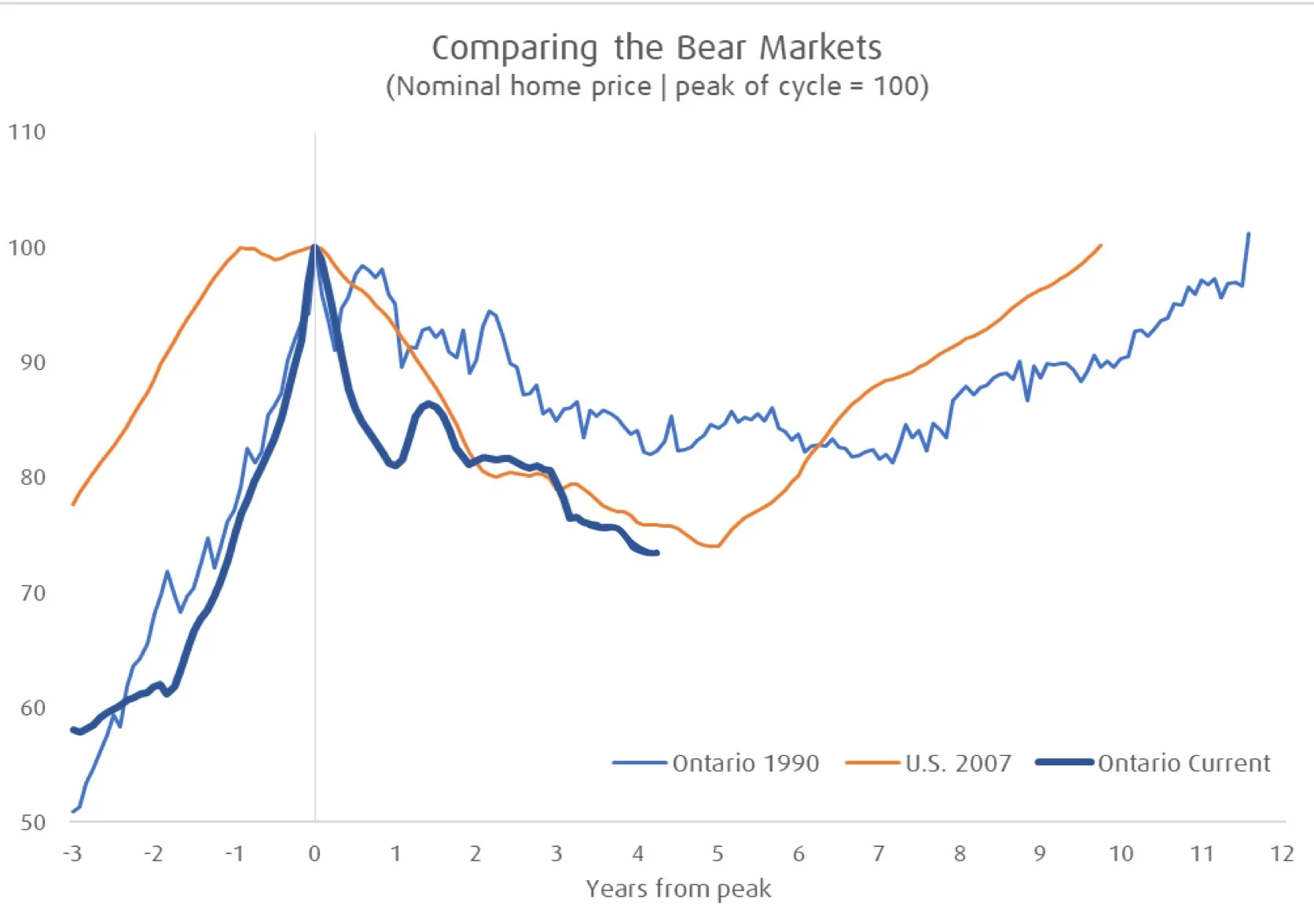
BMO Capital Markets published this chart to illustrate the trajectory of the ongoing Ontario housing market correction compared to those of major historical housing bubbles. History doesn’t repeat itself, but it often rhymes. You can see how eerily close Ontario’s recent housing correction has followed that of our US counterpart in 2007.
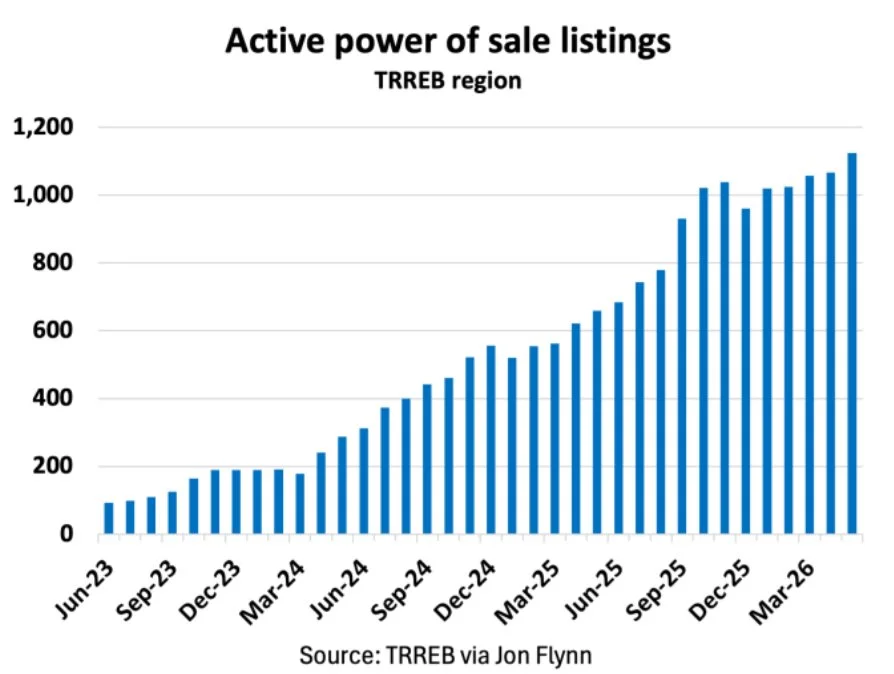
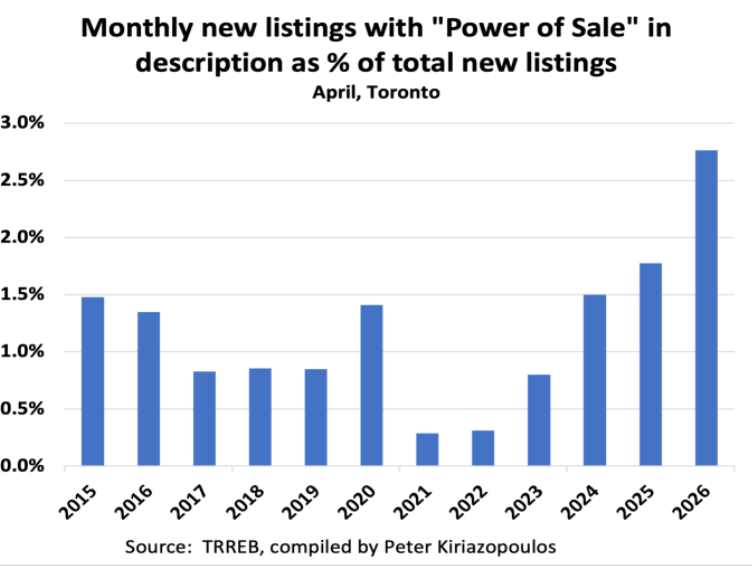
We are seeing both signs of market instability and tightening simultaneously. The cracks are showing for Canadian borrowers. Power of Sale listings on the Toronto Real Estate Board are still creeping up. New data from Jon Flynn (Flynn Real Estate Inc) shows active power of sale listings in the GTA are up 70% y/y and 360% compared to the same month in 2024, so far in May. Totally almost 3% of all new listings.
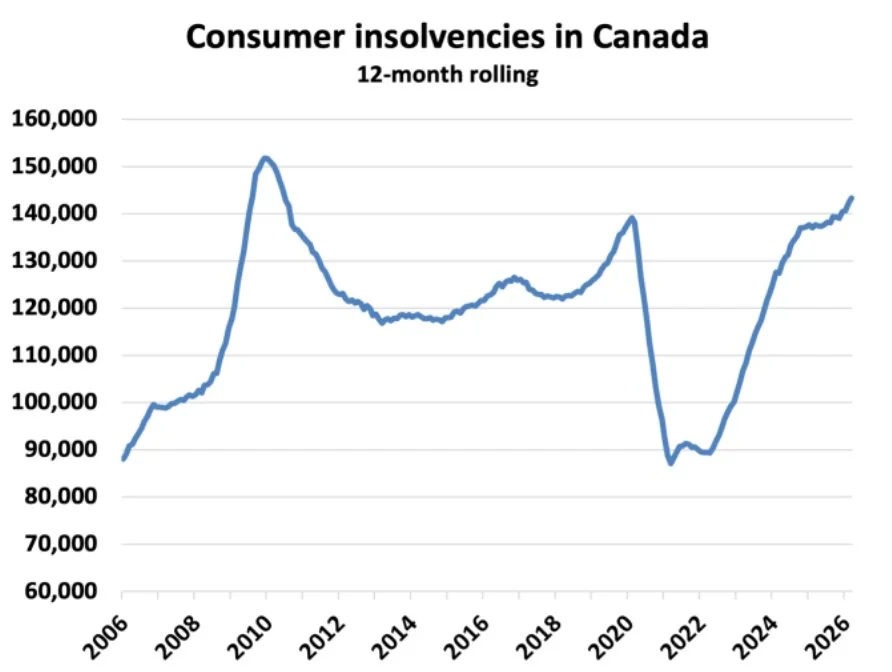
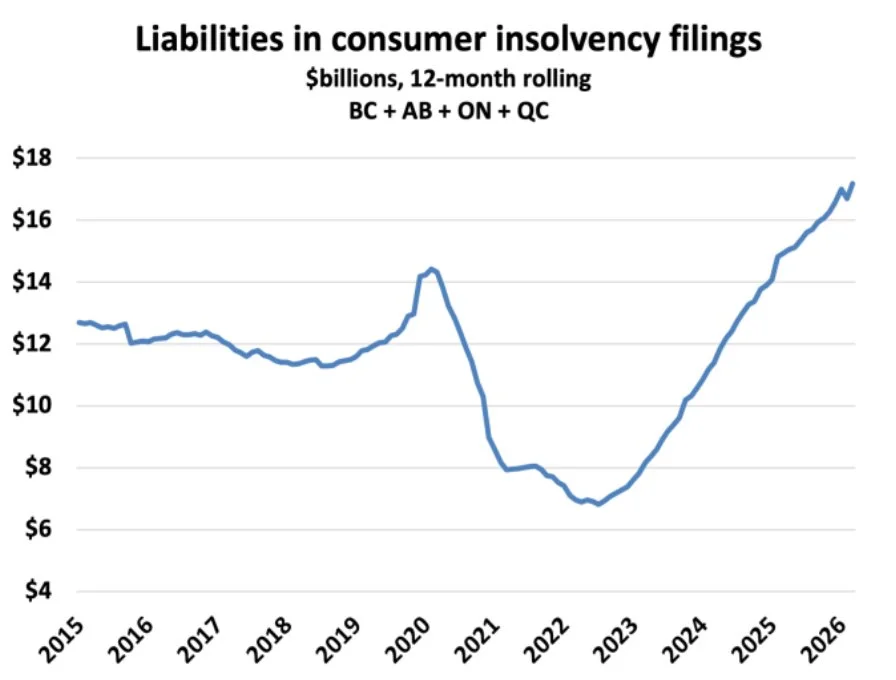
Consumer insolvency continues to rise, hitting the 2009 highs. The potential losses to lenders ultimately depend on the liabilities in insolvency filings, rather than on the number of filings themselves. On that point, liabilities were up 37% y/y in March, including a whopping +58% in Ontario, where they surged to unprecedented highs.
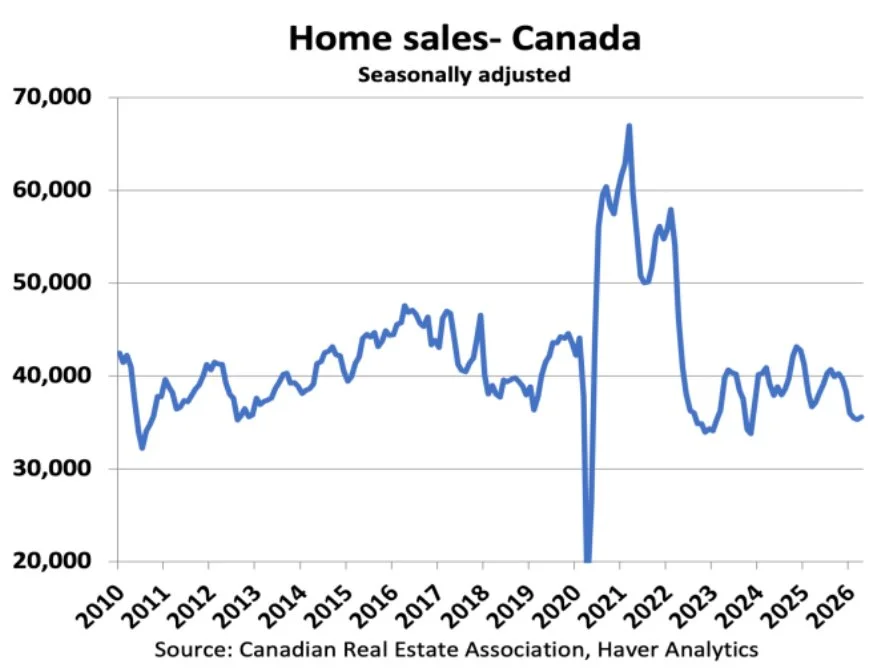
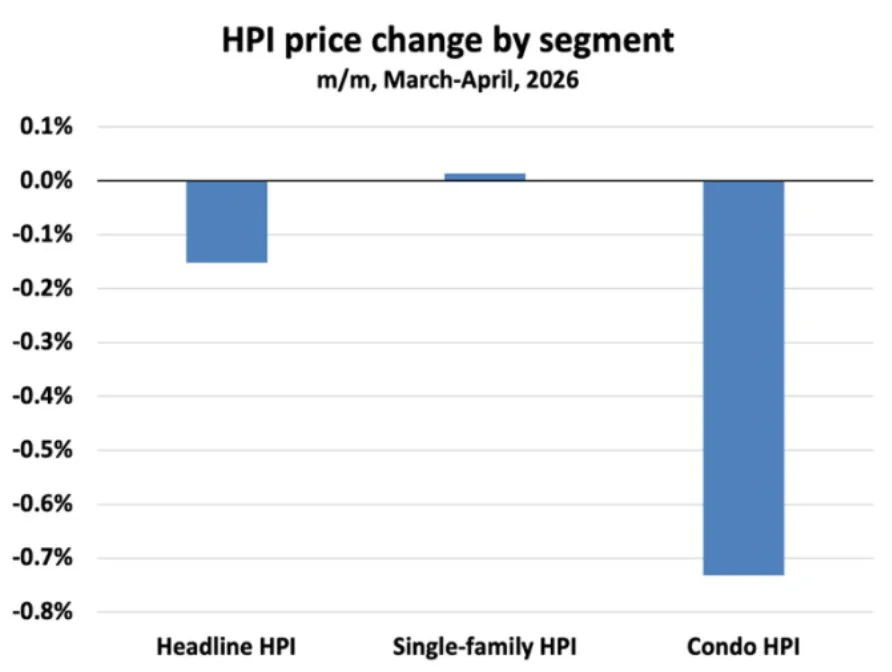
At the same time, seasonally adjusted home sales were up 0.7% m/m across the country in April, led by big increases in Alberta (+3.6% m/m) and Ontario (+4.3%). And although the headline HPI was down 0.1% m/m, the decline is due to weakness in the condo market. The single-family benchmark was actually slightly positive for the first time in 15 months.
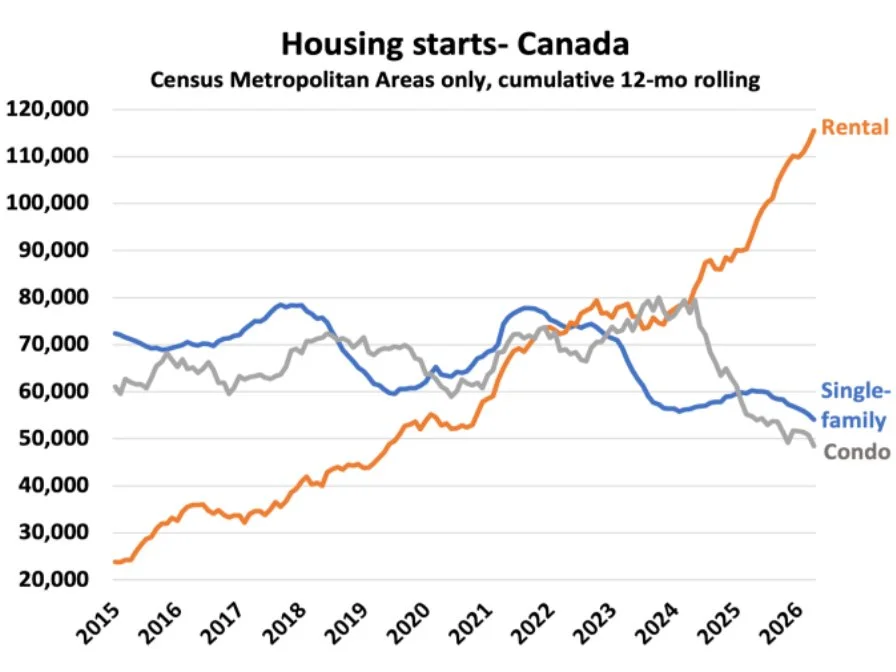
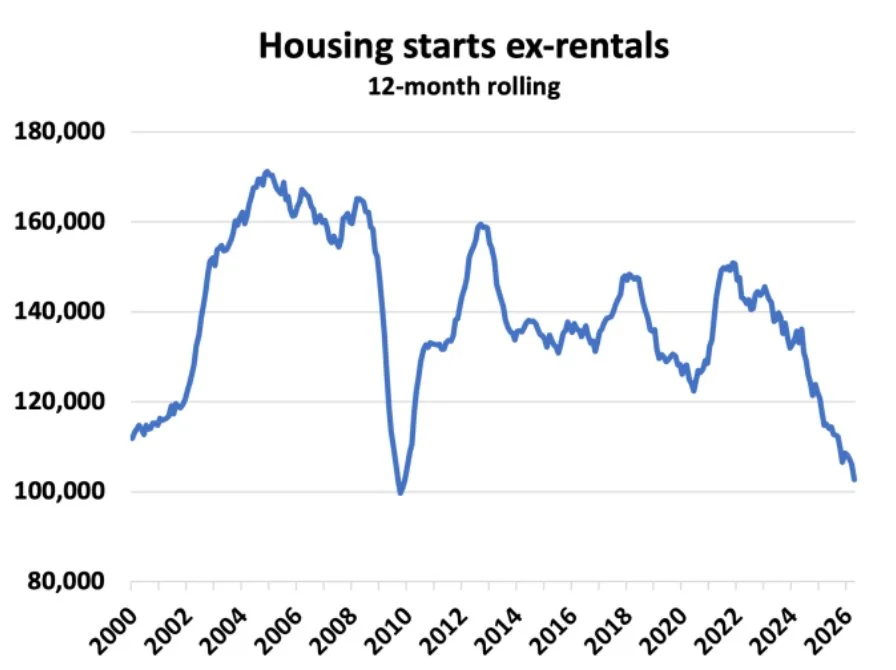
The tightening in the single-family segment can be partly attributed to declining new single-family home supply.
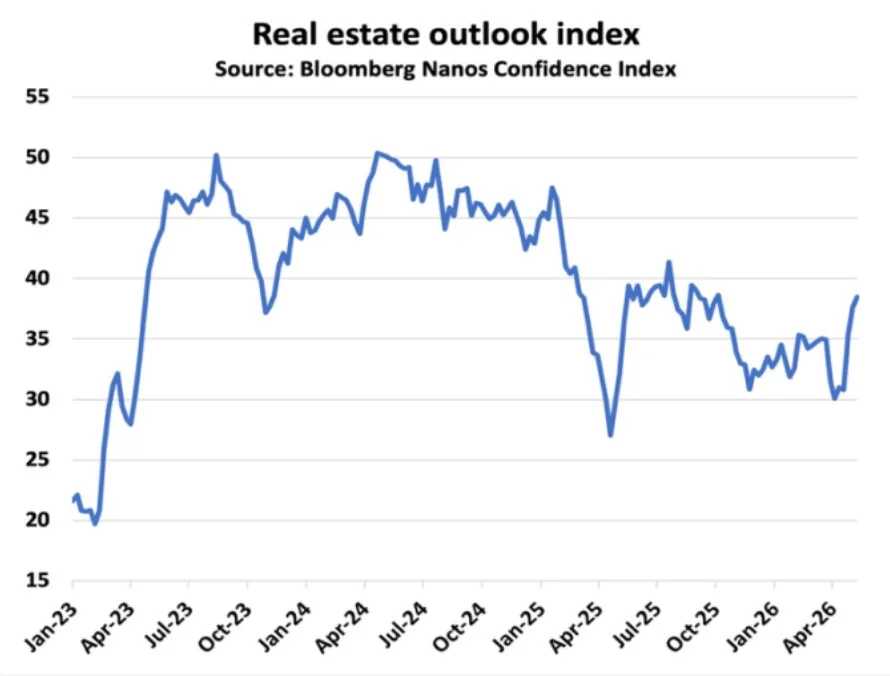
Surprisingly, the Bloomberg Nano Weekly Real Estate Outlook Index showed that housing sentiment is perking up. It has jumped 8 points in the last three weeks.
How do you know when you have reached the bottom of any market? It’s impossible to know when you're in it. The market is influenced by both the macroeconomics and sentiment. But which one sparks a market shift? Is it the broader economic fundamentals that change people's spending, or is it the way consumers feel about the future outlook? It is likely impossible to know, and either way, we won’t know until we are on the other side.