

Rents are falling, and there’s no end in sight!
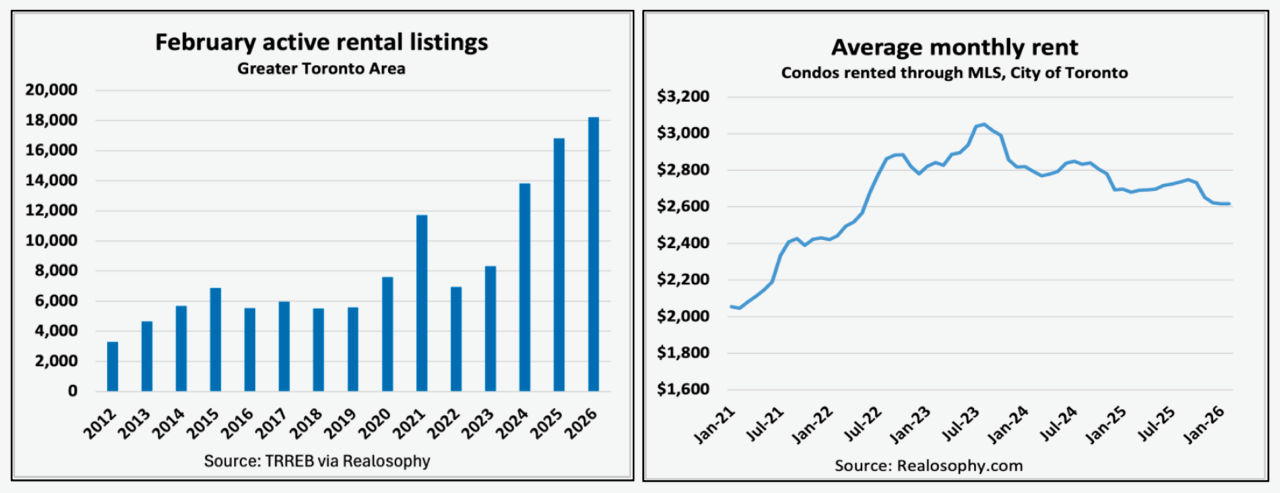
Condo investors looking for a reprieve will have to keep their expectations in check. Active rental listings hit a February high last month, with over 18,000 on the TRREB MLS system. This doesn’t include the various private websites landlords use to list their properties for lease, such as Facebook Marketplace, Viewit, Rentals.ca, etc. Rents have slowly been falling in Toronto since peaking in 2023.
There are two major headwinds heading our way:
Declining Non-permanent residents (renter population)
Incoming Condo Completions & Purpose Built Rentals
There is a strong correlation between the growth/decline of non-permanent residents and rent prices, with NPR typically leading the change. The vast majority of NPR are renters. A rapid influx of new NPRs has an immediate impact on rental unit demand. So, it’s not surprising that our peak rental prices aligned with the height of NPR growth in 2023.
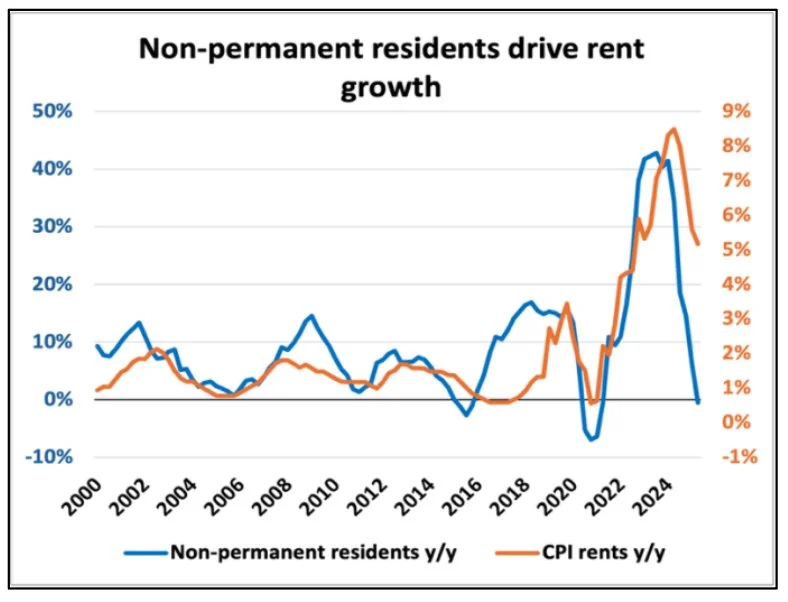
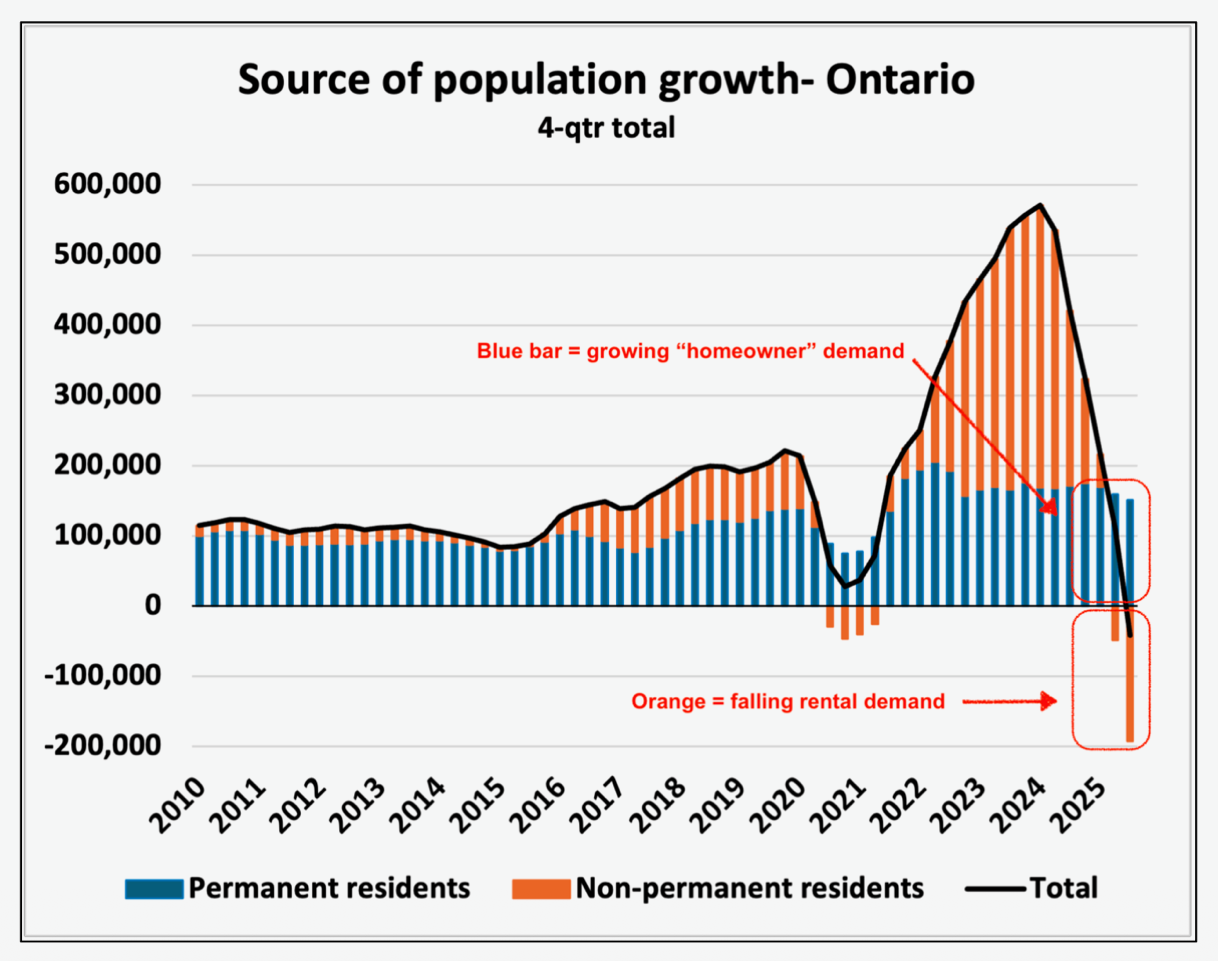
We have now seen NPR's growth go negative for two straight quarters. This was expected. For one, the lack of job opportunities (declining employment and rising unemployment), coupled with the rising cost of living (CPI growth), is causing Canada to lose its lustre as a destination. Combine that with the federal government's mandate to reduce the share of non-permanent residents in our population from 7% to 5%, and you have guaranteed a long-term decline in rental demand in Canada.
Unfortunately, this is not the only issue investors are facing. On the supply side, Canada is seeing the largest push for purpose-built rental since the 1970s. When CMHC introduced its primary purpose-built rental program, the Apartment Construction Loan Program (ACLP), in 2017 as part of the National Housing Strategy, it laid the foundation for builders and investors to access cheap capital for financing construction. Not an issue back in 2017. However, as the pre-construction market dried on the vine in 2022, with interest rates skyrocketing and investors disappearing, builders were left holding the bag with vacant land or unsold projects. Many pivoted to the CMHC program as an alternative. CMHC now holds 88% of Canada’s new purpose-built rental apartment starts in 2024, up from 5% in 2017.
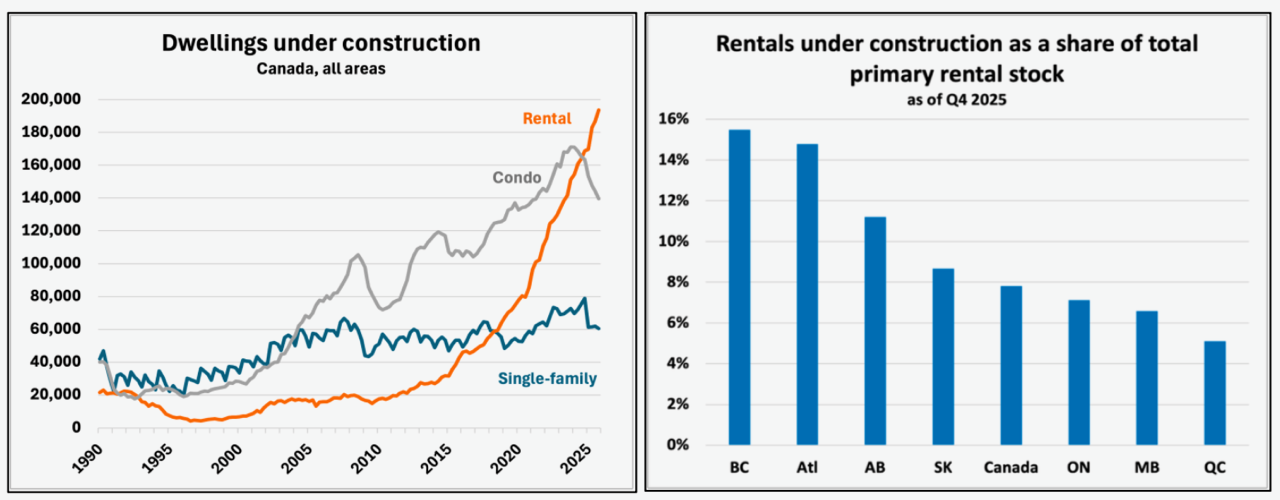
Ontario and Toronto were not the worst abusers of this program, as we are slightly below the Canadian average. However, we are dealing with another supply issue. Although declining, Toronto is still expecting the completion of 20,000 pre-construction condos per year in 2026 and 2027. A large majority of these condos will enter both the resale and rental markets.
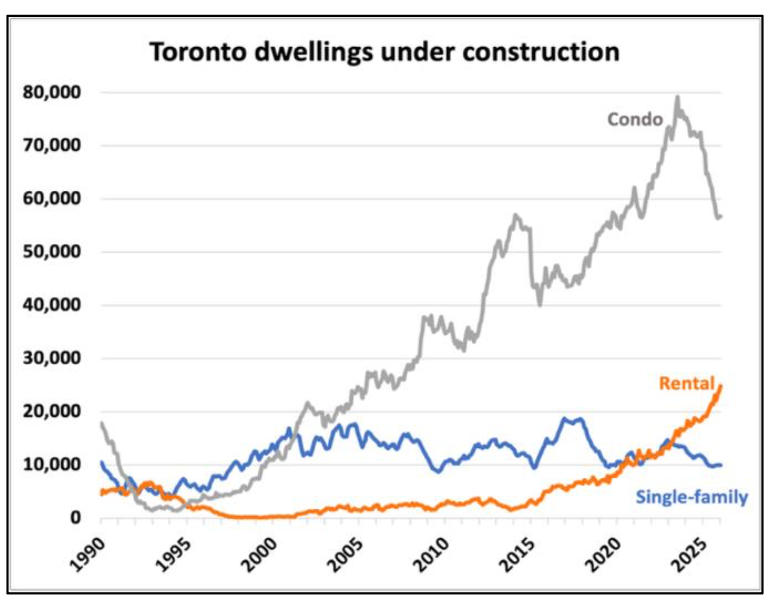
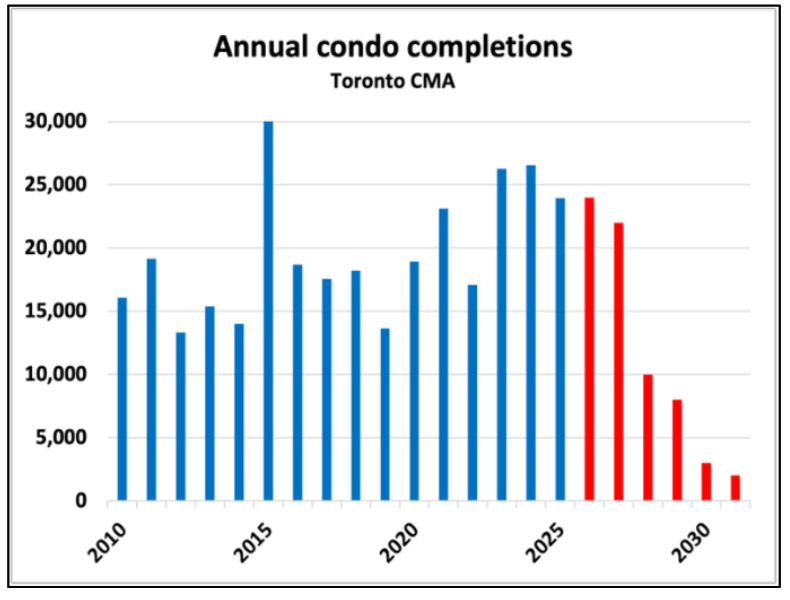
There is a silver lining: rents paid as a share of consumption have hit all-time highs. This is bad for our economy.
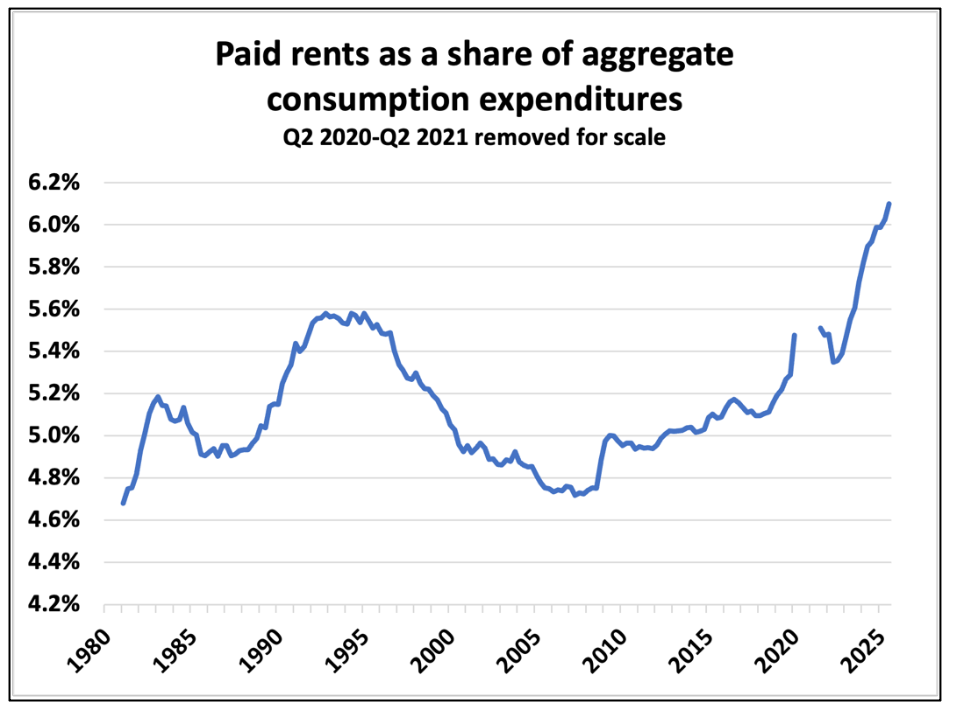
When renters are paying more of their disposable income to household expenses, they have less money to save. They are less likely to start new businesses, invest in other markets and even save up for a down payment on their first home. Hopefully, this will lead to healthier, more balanced growth in the future.